Love Beneath our Feet
A Shop of the Heart Press essay

Haitian Ceremonial Prayer Flag c. 1970 Artist unknown
Before anyone arrived, I was alone in the room.
The red carpet — thickly cushioned beneath — held my weight the way a living room does. Soft underfoot. Almost domestic. Almost protective. The old wood of the shop carried its quiet warmth — not decorative warmth, but the kind that lingers in beams that have held years of touch and breath.
This is not sugar. I do not begin with candy hearts.
This day began with heat.
I am a walker. When I do not know how to belong, I walk. Ground reveals itself slowly — in soil, in riverbeds rerouted by men, in statues cut short at the shoulder, in trees that breathe above names carved in stone. The rhythm of walking reveals our spirit. It reveals what remains.
This particular Valentine’s Day, I opened the doors of the Shop of the Heart in downtown Renton and welcomed neighbors, friends, and walkabouts inside. Not for a program. Not for a performance. But for a brief, almost hidden pilgrimage — a chance to practice noticing what has been beneath us all along.
Erzulie energy is not soft in a weak way — it is emotionally intelligent power. Love that knows its worth. Protection that doesn’t apologize.
Before the walk began, before the room filled with voices, I stood beneath the Haitian flag above me.
The light catches sequins and thread, and something in them refuses to cool. Each time I return, I feel the same wonder — passion caught in motion. Figures rise from the fabric not as decoration but as activity. Nothing rests. Even in stillness, there is heat.
This is a Haitian Vodou prayer flag. Traditionally sewn by men — bent over cloth under a single bulb, bead by bead, night after night. Repetition. Patience. The discipline of returning to the same surface until the image emerges through labor.
The glitter reminds me of something older.
As a child, I would crouch at the edge of the beach, watching inch-tall waves roll in and recede. Each small surge carried silt and sand. When the water slowed, the grains dropped into delicate patterns. Mica flecks caught the sun like sequins. The wave returned to the ocean, and in its wake, a new line remained — fractal, glittering, precise.
The hand sews with sequins. The ocean sews with mica. Both leave a glittering line behind.
But even as a child I felt something deeper —an intelligence that would not stay silent,
a liturgy laid down in sand and light, again and again across the centuries.
Now it rises as weave, bead, sequin, and flame. Without apology. When water slows, it does not disappear. It releases what it carried. The grains settle. The glitter stays.
That is sediment — not heaviness, but beauty that has chosen to remain.
This flag bears the bright sediment of love. Love that endures. Love that refuses to be silent. Practiced love that burns.
My breath deepens and slows.
My gaze rises into something that does not hurry.
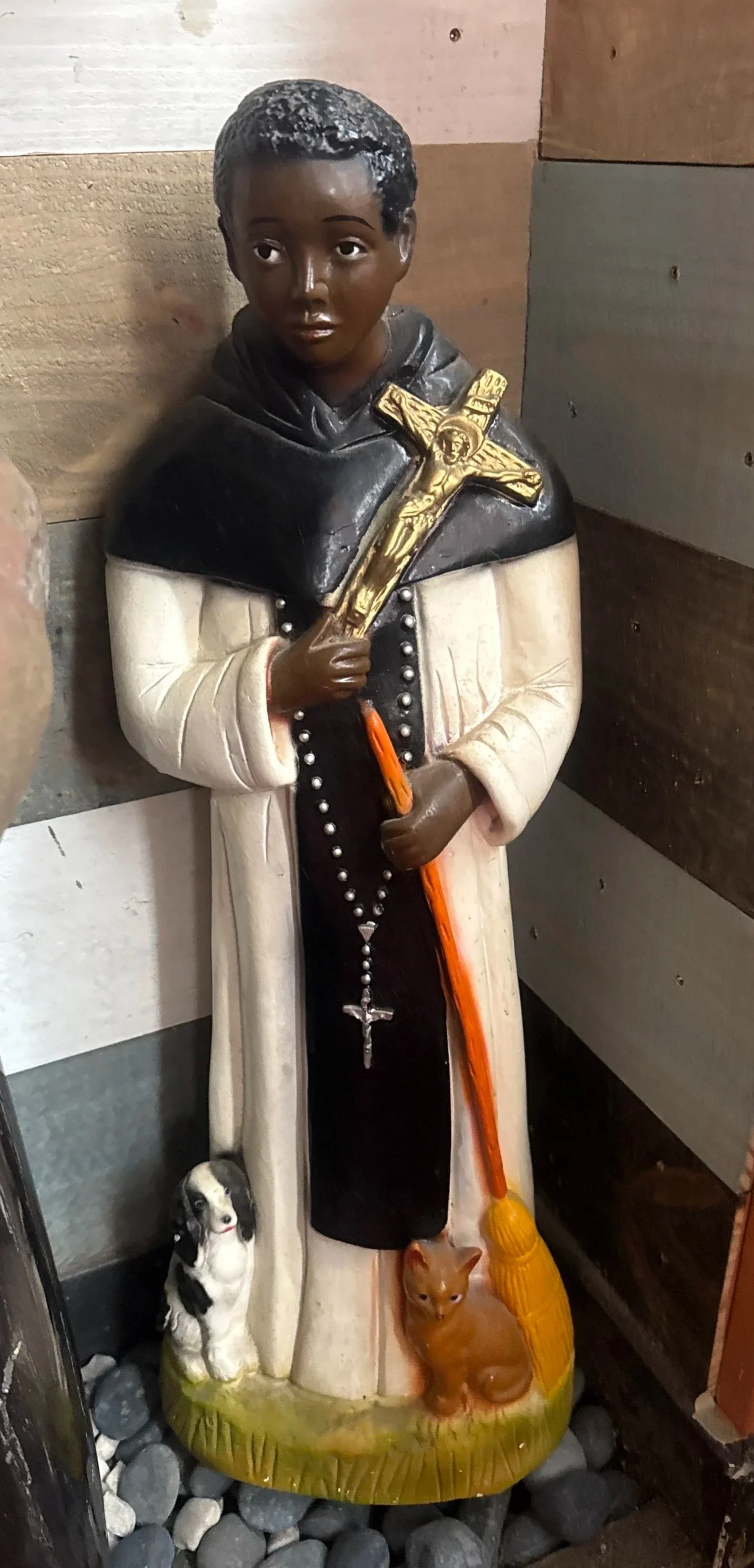
St. Martin de Porres (Peru, 1579–1639) Ceramic devotional statue
What does not hurry is Saint Martin de Porres.
He stayed with his work no one applauded. but love can also sweep. He remained close to the ground long enough for it to become holy. He swept corridors no one noticed. He carried water no one praised. He tended the sick no one would touch. Stories of miracles circle him.
Born in Lima in 1579 to a Spanish nobleman and a freed Black woman, he entered monastic life not as priest but as servant.
But what steadies me is something simpler.
He remained.
He loved.
He healed.
He served.
.
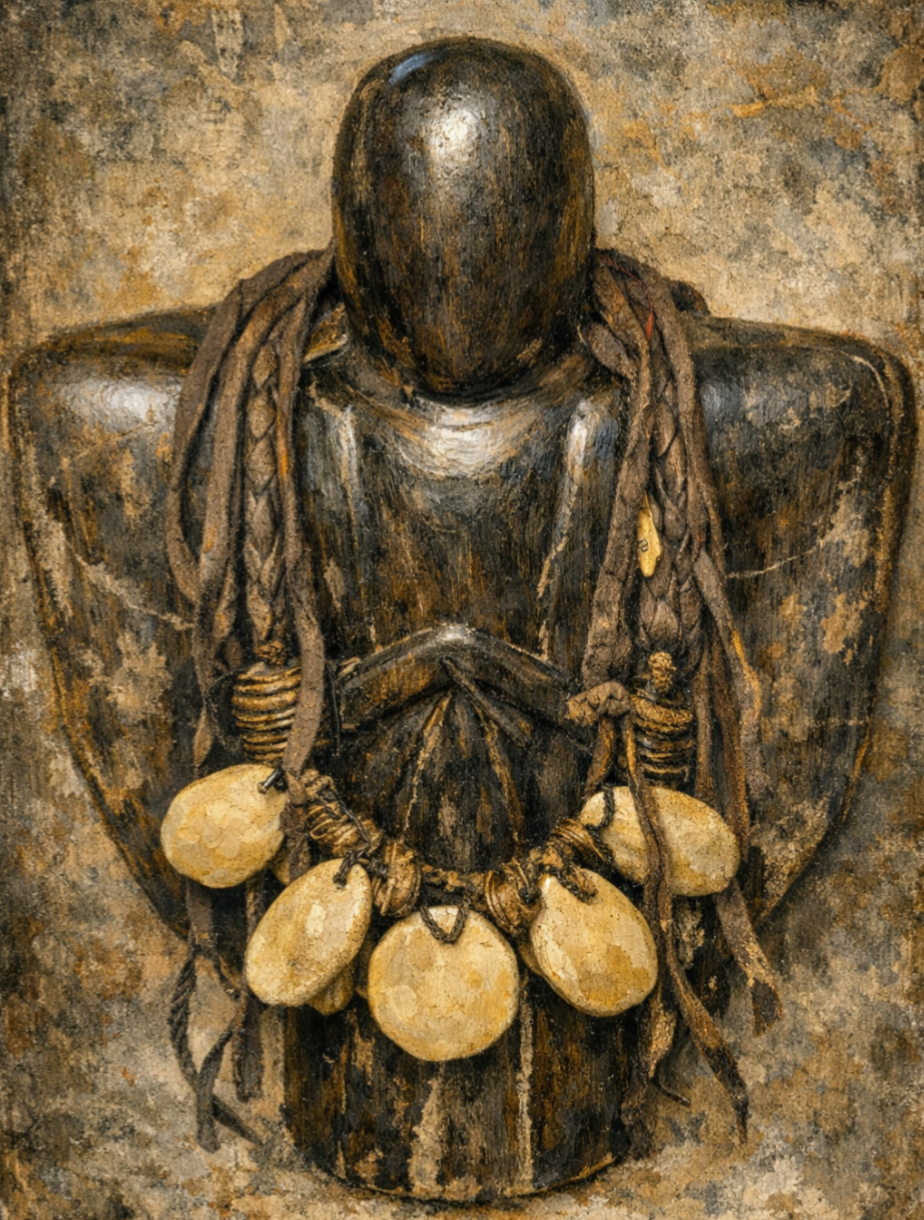
Balinese Hand Carved Petrified Wood Guardian Angel.
A communal act of enduring love!
Above him, three timeless guardians angels stand. Created in reverence from ancient forests.
Sap rising.
Rain entering grain.
Roots drinking volcanic water.
Then burial.
Pressure.
Mineral replacing fiber cell by cell.
Even now, the rings are visible. Growth held in stone. The grain remains alive.
I breathe.
Fire. Cadence. Watchfulness.
Together.
All this rises in me.
I am ready to walk.
I reach for the door.
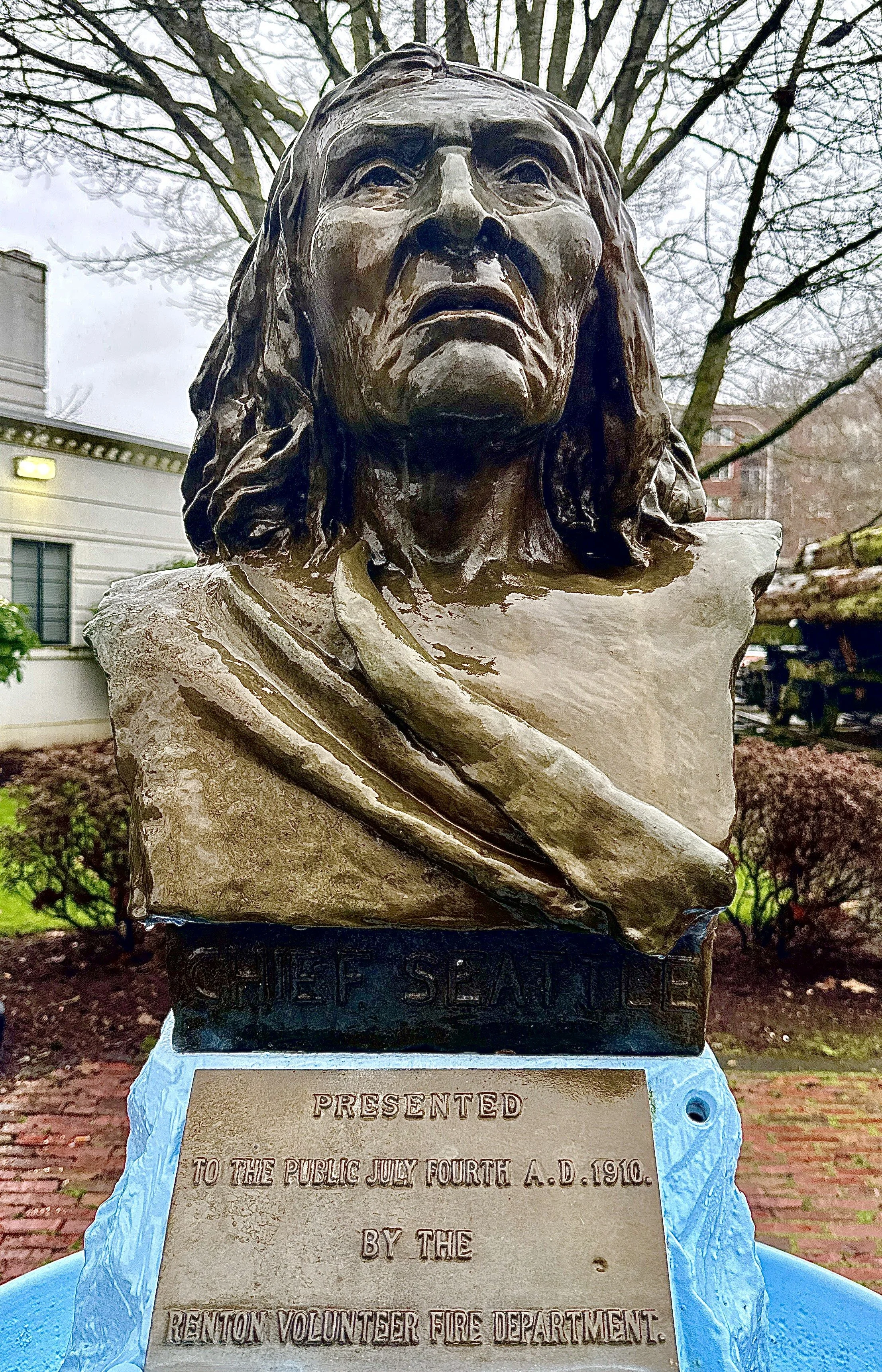
Chief Si’ahl (Chief Seattle)Leader of the Squamish and Duwamish peoples 1786–1866
The bust does not appear immediately. It takes a few minutes — long enough for the rhythm of walking to settle. Footfall after footfall. Traffic continues its argument. I continue mine.
Dark against motion.
Iron.
The form stands on a blue-painted base. Cast iron dressed in municipal color. The blue does not soften it. Up close, the absence is unmistakable.
The arms are gone. Not weathered away. Cut clean at the shoulder. The back flattened, shaved. The torso interrupted — as if something meant to gesture has been restrained.
He was born Si’ahl — pronounced Si’-aahl — a leader of the Duwamish and Suquamish peoples. In English, he became known as Chief Seattle.
The city took his name. The land did not.
He lived in a world already changing. Trade. Disease. Settlement. The Treaty of Point Elliott signed. Shorelines redrawn. Villages disrupted. He had children. His daughter Angeline — Kikisoblu — remained here long after the treaties. She worked. She endured. She is buried not far from here.
This is not love that looked like triumph. Sometimes it looks like staying. Sometimes it looks like living beside those who reshaped your river and choosing not to disappear.
Sediment again. Belonging layered into place. The arms may be gone but the belonging remains.
I do not look into his eyes yet.
Just beyond him, a sign waits.
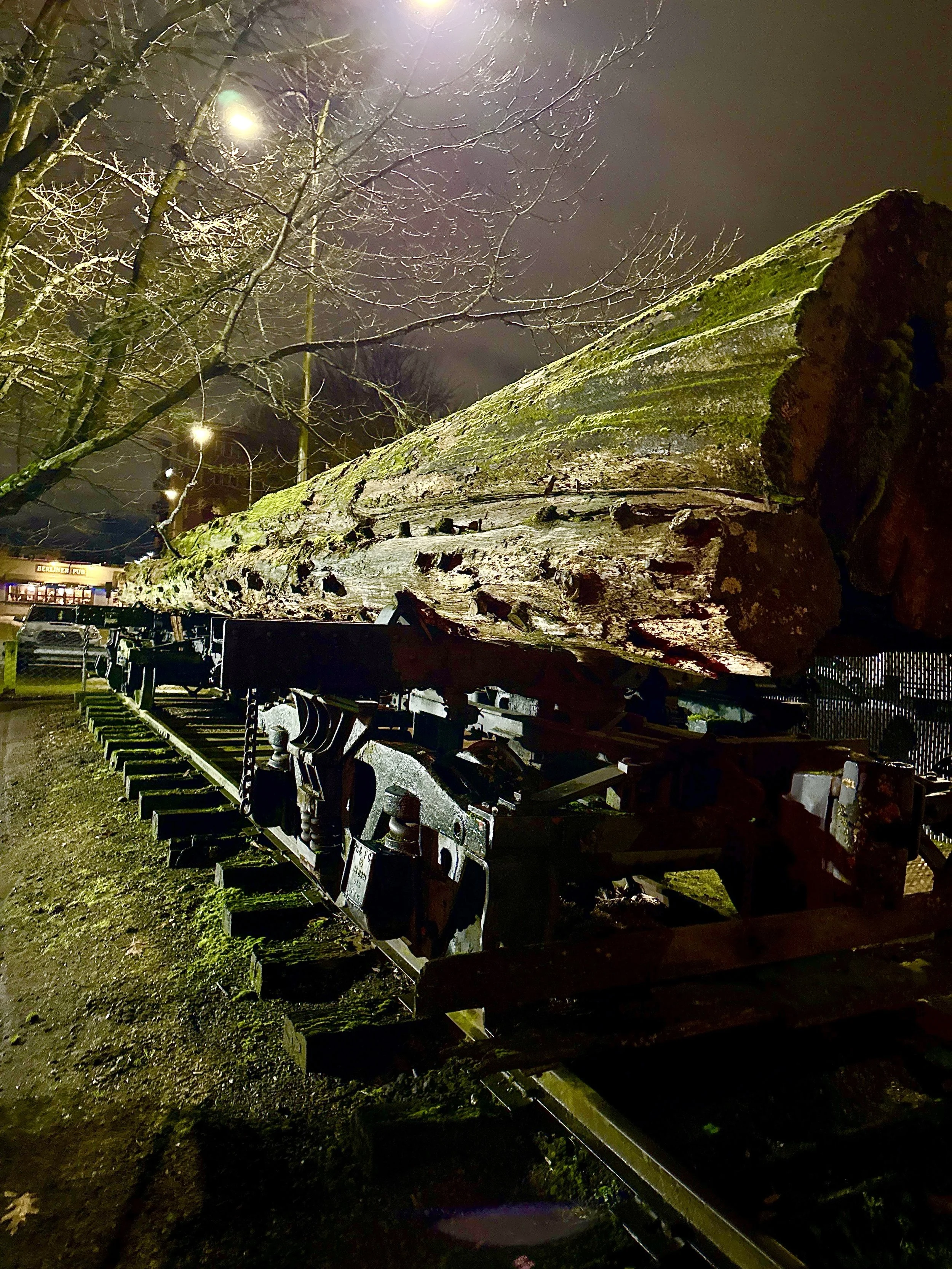
Disconnect. An 0ur railroad door exhibit for Renton Historical Society, Washington state
Disconnect.
Rail cut through forest. Steel carried trunks. Riverbeds redirected. Industry measured value in board feet and shipment schedules. Nearby lie giant logs — relics of that era — moss softening their circumference. Once upright. Once canopy. Now sectioned. Displayed.
My hand rests against one. The moss is cool. The rings visible. This is time compressed into circles.
Fire built cities. Cadence swept floors. Watchfulness endured centuries.
Here they meet again.
Sediment.
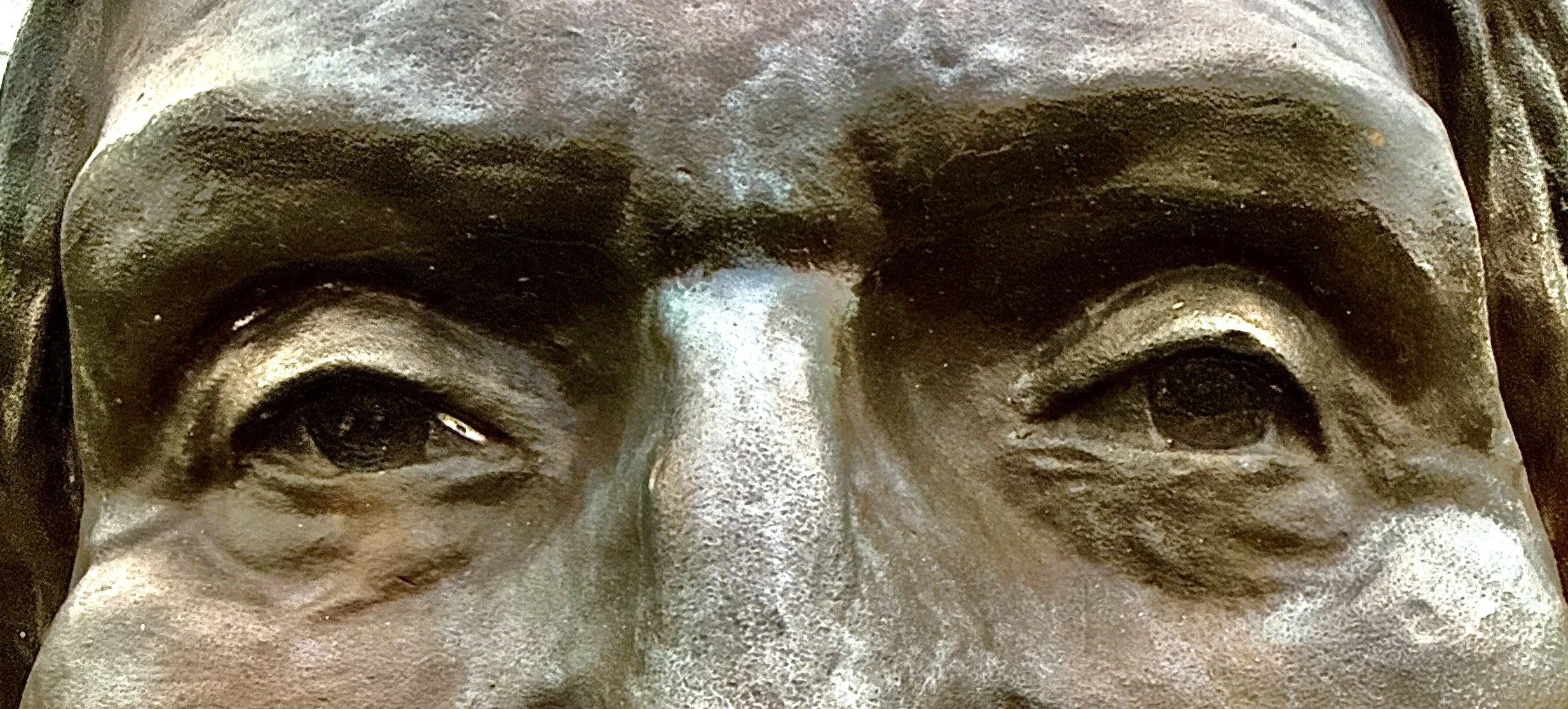
Close up of the eyes of Chief Si’ahl (Chief Seattle)Leader of the Squamish and Duwamish peoples 1786–1866
I turn back toward Si’ahl.
The bust is based on a photograph taken in the mid-1860s by E. M. Sammis — one of the only confirmed photographs of him. He was already an old man. The speech often attributed to him may have been reconstructed. The face was not.
I step onto the small perch and lift my eyes to his eyes. I was taking in the form of this man eye to eye. For a moment we were standing together. No shame. No accusation. There is depth. Continuity.
The cut arms do not define him. The flattened back does not reduce him.
He remains.
For a moment, I think of Saint Martin with his broom. Of the Haitian men bent over sequined cloth. Different lands. Different ruptures. The same refusal to disappear.
This is fire guarding memory.
Sweeping guarding dignity.
Stone guarding time.
A man guarding continuity simply by remaining.
Not sentiment.
Sediment.
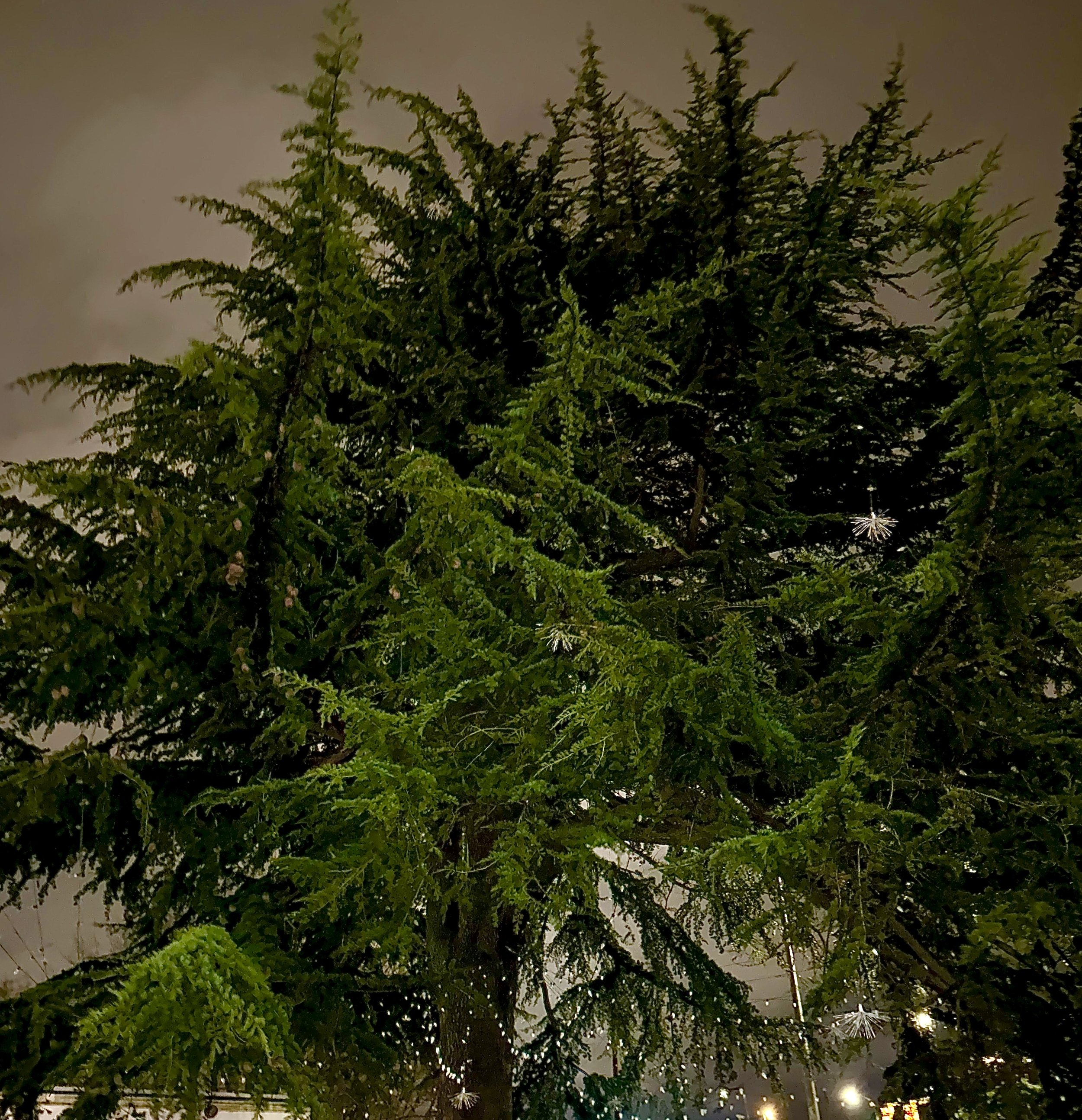
Large Deodar Cedar next to Renton Historical Society
A few steps more and the deodar cedar rises above the sidewalk.
I step beneath it.
The air changes. Not as sharp as the street. Not as warm as the shop. Something in between.
Its branches do not argue. They widen. My breath is lifted upwards.
After iron and moss and rupture, the tree explains nothing.
It lives.
From where I stand, the Renton Veterans Memorial is visible beyond the trunk. Names carved in stone. Not abstractions. Not numbers. Names. Before the uniform, there was laughter in her family. A voice someone recognized in the dark. Hands that built and carried.
Under cedar and before stone, the living and the remembered share the same air.
Love survives interruption.
Love survives dismissal.
Love survives removal.
I linger longer than I expected.
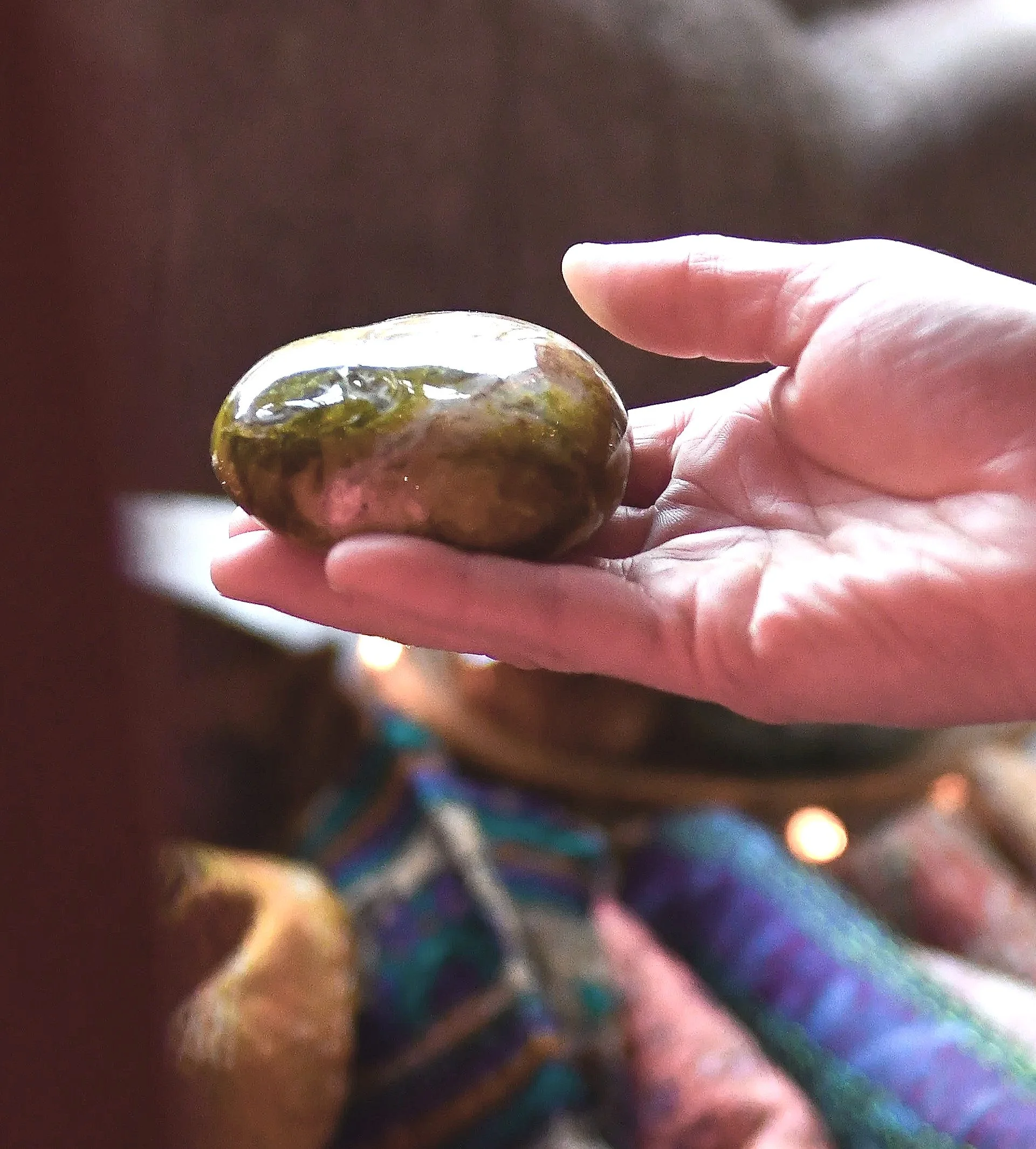
Feeling steadied, I return to the shop and you were part of the return.
The red carpet yields. The wood holds warmth.
Cristhal has set water to boil.
Steam rises. We pour into simple paper cups. No brass. No porcelain glowing with light. Just heat. Just hands. Just presence. We laugh a little.
After fire and iron and cedar, what else is there to do but sit down together?
Love that survives is rarely dramatic.
It is poured.
It is shared.
It is practiced.
Not sentiment.
Sediment.
Glitter fades.
Deep love stays.
Love beneath my feet.
Happy Valentine’s Day.